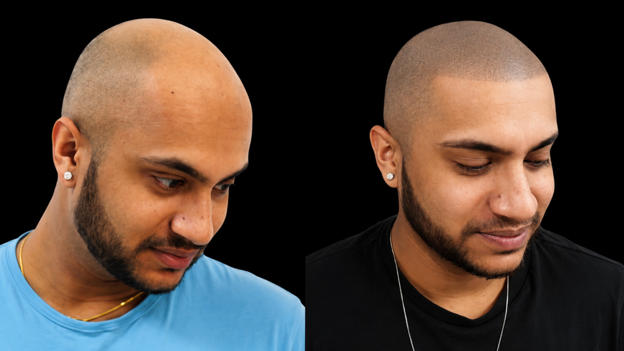
Quick answer: Head tattoos for hair loss work by depositing thousands of tiny pigment dots into the scalp’s upper layer, each one mimicking a real hair follicle. The dots reduce the colour contrast between skin and hair, which is what actually makes thinning patches visible in the first place. Done well, the result reads as density and shadow rather than as individual marks, even up close.
Content Covered:
- How Head Tattoos for Hair Loss Actually Builds Up the Illusion.
- Head Tattoos for Hair Loss vs Other Density Options.
- What a Hair Tattoo for Men Can and Can’t Fix.
- FAQs
How Head Tattoos for Hair Loss Actually Builds Up the Illusion
A head tattoo for hair loss, more accurately called scalp micropigmentation, isn’t shading or painting. It’s built dot by dot, in a technique that borrows more from distinct dot work than from traditional tattooing.
Here’s roughly what happens during a session:
- A digital pigmentation device deposits pigment using an ultra-fine needle, far smaller than what’s used for body tattoos, into the upper layer of the dermis rather than deeper skin.
- Each individual dot is sized, angled and shaded to represent a single follicle, matched as closely as possible to your natural hair colour and growth direction.
- Practitioners deliberately vary dot size and spacing. Uniform, identical dots are actually can make SMP look artificial up close, so the irregularity is an intentional technique.
- Density gets built in layers across two to four sessions rather than in one sitting, which allows the pigment to settle and lets the artist adjust, as healing progresses.
That layering step is one most people don’t expect. You don’t walk out after session one with the finished look. The first session lays a base; later sessions refine tone, patch any unevenness, and deepen density where needed, similar to how a tattoo artist might build shading in stages rather than committing everything at once.
Head Tattoos for Hair Loss vs Other Density Options
Compared with topical treatments, which work for less than 40% of users and require months of consistent use before any visible change, scalp micropigmentation gives an immediate, visible shift in density within a session or two.
It’s not treating the underlying cause of hair loss the way medication might; it’s purely a visual solution, but for a lot of men that’s precisely the point. No daily routine, no waiting to see if it works, no surgical downtime.
What a Hair Tattoo for Men Can and Can’t Fix
A hair tattoo for men is genuinely excellent for:
- Softening a receding or patchy hairline so it reads as a natural, if slightly mature, style rather than an obvious retreat.
- Adding perceived density to a thinning crown or diffuse thinning across the scalp.
- Camouflaging transplant scars or older, more visible scarring from previous procedures.
- Creating a clean, deliberate shaved-head look for men with more advanced hair loss who want that finished, buzzed appearance.
What it won’t do is regrow a single hair. It’s a cosmetic illusion, not a medical treatment, and any clinic telling you otherwise isn’t correct. Skin type matters too. Oilier skin and drier skin hold pigment slightly differently, and your practitioner should be assessing that at consultation rather than treating every scalp identically.
Hair Tattoo Milton Keynes: What a Local Consultation Actually Involves
If you’re looking into a hair tattoo in Milton Keynes, the process at a proper clinic starts with a genuine consultation rather than jumping straight into a treatment plan.
At True Scalp Clinic, that means a full assessment of your scalp, a patch test, and a conversation about your medical history before anything is agreed. Treatment then typically runs across two to three sessions, each one building on the last, so your hairline or density target is refined gradually rather than committed to in one go.
Ready to Explore Your Options?
Head tattoos for hair loss work because they solve the actual problem behind thinning hair: contrast, not just hair count. Whether you’re weighing up a hair tattoo against other options, or you’re specifically searching for a hair tattoo in Milton Keynes and want to see how it would work for your hairline, the underlying technique is the same: thousands of carefully placed dots, built up in layers, tailored to your scalp.
If you’d like an honest assessment of what’s realistic for your hair loss pattern, book a free consultation with True Scalp Clinic and get a treatment plan built around your actual scalp rather than a generic template.
FAQs
Does a head tattoo for hair loss look natural?
Yes, when done properly, the dots blend together the way “pointillist artwork” does, reading as shadow and density rather than as individual marks. The realism depends heavily on dot variation, spacing and how well the practitioner blends the treated area into your existing hair.
How many sessions does a hair tattoo for men typically need?
Most clients need two to four sessions, spaced a few weeks apart, to build up density gradually and let the pigment settle between appointments. Your practitioner will confirm the exact number based on your hair loss pattern and how your scalp responds after the first session.
Can scalp micropigmentation regrow hair?
No, it’s a cosmetic technique that creates the visual appearance of density; it doesn’t stimulate or regrow actual hair follicles. If regrowth is your goal, that’s a separate conversation with a GP or dermatologist about medical treatment options.
Is a head tattoo for hair loss suitable for all hair loss patterns?
It works across a wide range of patterns, from a receding hairline to diffuse thinning to full baldness, and can also camouflage transplant scars. Suitability does depend on your specific scalp and skin type, which is exactly what a consultation is designed to assess.
Does the treatment hurt?
Most people describe it as mild discomfort, similar to light scratching, rather than genuine pain. Numbing cream is commonly used during the session to keep things comfortable throughout.
About the author: Written by the team at True Scalp Clinic, Milton Keynes. Our lead specialist, Irek, is a detail-focused scalp micropigmentation practitioner who came to SMP after undergoing the treatment himself and experiencing its results first-hand. That personal experience shapes the clinic’s focus on precision, natural-looking density and treatment plans built around each client’s actual scalp rather than a generic template.